Drywall Installation
How Much Does Drywall Installation Cost in Massachusetts? (2026 Guide)
· By Cleiton Melquiades da Silva
If you are planning a renovation, an addition, or a repair in Massachusetts, one of the first questions is simple: what will the drywall actually cost? The honest answer is that it depends on the room, the finish level you want, and the condition of what is already there. Two projects that look similar on paper can land at very different numbers.
This guide walks through how drywall installation is usually priced in Massachusetts, what a fair quote should include, and the factors that move the price in either direction. The goal is to help you read an estimate with confidence and know the right questions to ask before anyone starts hanging board.
How Drywall Pricing Usually Works
Most drywall work in Massachusetts is priced one of two ways: per sheet of board installed, or per square foot of finished wall and ceiling area. Contractors sometimes quote a flat project price too, but that number is almost always built up from those same underlying units.
As a general market reference, per square foot pricing for hang and finish work commonly falls in a broad range depending on the region, the crew, and the complexity of the space. Per sheet pricing works the same way, since a standard 4 by 8 sheet covers 32 square feet. These are market ranges, not a fixed rate. The only number that means anything for your project is a written quote based on your actual rooms.
Be careful comparing a per sheet price to a per square foot price directly. One may include finishing and the other may not. Always confirm what each figure covers before you treat two bids as apples to apples.
What the Price Usually Includes
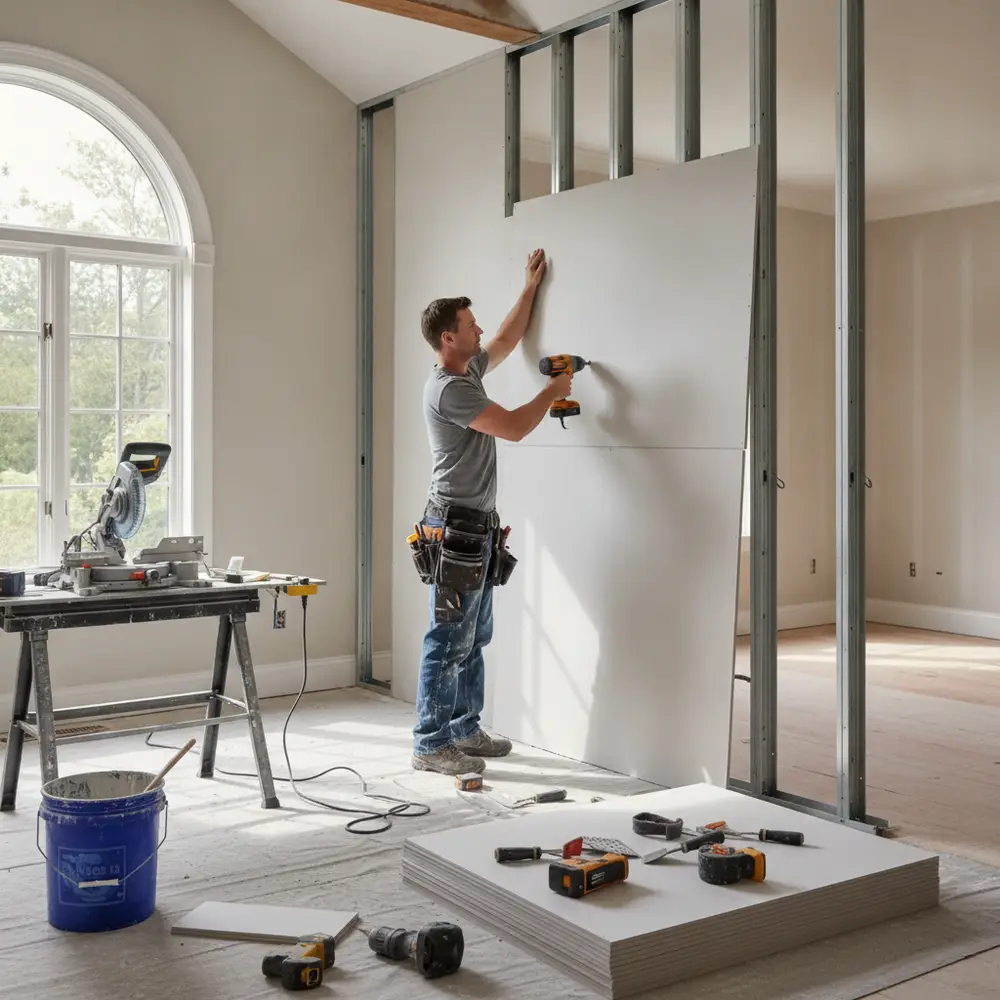
A complete drywall installation is more than screwing board to studs. A full quote generally covers hanging the sheets, taping the seams, applying multiple coats of joint compound (the mud), sanding smooth, and bringing the surface to a defined finish level ready for primer and paint.
The finish level matters a lot. A Level 4 finish, common for walls that get flat or eggshell paint, is the typical residential standard. A Level 5 finish adds a full skim coat over the entire surface and is used where glossy paint or raking light would reveal every imperfection. Level 5 costs more because it is more labor and more material.
When you read a quote, look for line items or notes that spell out hang, tape, mud, sand, and finish level. If an estimate only says "drywall" with a single number, ask the contractor to confirm exactly where the work stops so there are no surprises before paint day.
What Drives the Cost Up or Down
Ceilings are usually more expensive than walls. Working overhead is slower and harder, and ceilings often call for extra fasteners and careful finishing, so the price per square foot tends to run higher.
Finish level is a major lever. Moving from a standard Level 4 to a full Level 5 skim coat adds material and labor across the whole surface. Specialty situations like moisture resistant board for bathrooms, fire rated assemblies, or soundproofing layers also raise the number.
Access and layout change the math. Tall ceilings, tight stairwells, lots of corners, curved walls, or rooms full of obstacles all slow the crew down. On the other hand, a large open rectangular space with easy access is efficient and tends to price lower per square foot.
Repairs and removal add cost. If old plaster or damaged drywall has to come out first, demolition, debris haul away, and disposal are real line items. Homes with old lath and plaster, common across older Massachusetts housing, can need extra prep before new board goes up.
New Construction vs Remodel vs Single Room
New construction and additions are usually the most predictable to price. The framing is open, access is clean, and the crew can move quickly across large runs of wall and ceiling, which tends to keep the per square foot cost efficient.
Remodels are more variable. The crew has to protect finished floors and existing rooms, work around plumbing and wiring, and often tie new board into old surfaces so the transition disappears. That extra care and coordination shows up in the price.
A single room or a patch job carries a different dynamic. Small jobs have fixed setup, mobilization, and finishing time that gets spread over less square footage, so the per square foot rate can feel higher than a whole house project even though the total dollar amount is smaller. That is normal and not a red flag.
Why a Written, Itemized Estimate Matters
A vague verbal number is where drywall projects go wrong. A written estimate protects both sides by putting the scope in plain language: the rooms and square footage involved, the finish level, whether removal and disposal are included, and what is left for the painter.
An itemized estimate also makes it easy to compare bids honestly. When each quote lists the same components, you can see whether a lower price is a genuine saving or simply a smaller scope that leaves work undone. The cheapest number is not a bargain if it stops before the surface is paint ready.
Ask that the estimate note the finish level, cleanup and debris removal, and any assumptions about existing conditions. Clear paperwork up front prevents the awkward mid project conversation about work that was never actually included.
How Papito Inc Quotes Your Project
Papito Inc is a family owned contractor based in Everett, MA, serving Massachusetts, Connecticut, New Hampshire, and Maine. With more than 7 years of hands on drywall, plastering, painting, carpentry, and tile work, the team has seen the full range of homes and conditions across the region.
Rather than guess from a photo, Papito Inc provides a free in home estimate. Someone measures the actual space, checks the condition of existing walls and ceilings, talks through the finish level you want, and confirms whether removal or repairs are part of the job. That way the quote reflects your project, not a generic average.
The company is fully insured and backs its work with a satisfaction guarantee. To get an accurate written estimate for drywall installation, call 781-498-8099 and schedule a free in home visit.
Frequently asked questions
- Does the drywall price include finishing?
- It should, but always confirm. A complete drywall quote covers hanging the board, taping seams, applying and sanding joint compound, and bringing the surface to a set finish level ready for primer. Some low bids only cover hanging the board, so ask the contractor exactly where the work stops before you compare prices.
- What is the difference between a Level 4 and Level 5 finish?
- A Level 4 finish is the common residential standard, with taped seams and coated fasteners smoothed and sanded, and it works well under flat or eggshell paint. A Level 5 finish adds a full skim coat over the entire surface for a uniform look under glossy paint or strong raking light. Level 5 costs more because it is extra material and labor across the whole wall.
- How long does drywall installation take?
- It depends on the size and finish. A single room can often be hung and finished within several days, since the joint compound needs time to dry between coats before sanding. Whole home or new construction projects run longer. Rushing the drying and sanding stages leads to visible seams, so good crews build in proper cure time.
- Do you remove the old wall first?
- That depends on the project. Sometimes new drywall goes over sound existing surfaces, and other times old plaster or damaged board has to come out first. Removal, debris haul away, and disposal are separate line items when they apply. A free in home estimate confirms whether removal is needed for your specific space.
- Is drywall cheaper than plaster?
- In most modern projects drywall installs faster and is generally more budget friendly than a full traditional plaster system, which is more labor intensive. Plaster still has its place, especially in historic homes where matching the original finish matters. The right choice depends on your home, your budget, and the look you want, and a contractor can walk you through both.
- How do I get an exact price for my drywall project?
- The only way to get an accurate number is an in person measurement and assessment of your actual rooms and existing conditions. Papito Inc offers a free in home estimate: the team measures the space, confirms the finish level, and notes any removal or repairs, then puts it in a written quote. Call 781-498-8099 to schedule.
Related services
Serving
Found this helpful? Make Papito Inc a preferred source on Google.