Drywall Installation
Water Damage on Drywall and Plaster: What to Do Next
· By Cleiton Melquiades da Silva
A brown ring on the ceiling, a soft patch of wall, paint that bubbles when you press it. Water damage on drywall and plaster rarely announces itself loudly, but by the time you see it the moisture has usually been there a while. What you do in the first day or two makes the difference between a small patch and a full section replacement.
This guide walks through the first steps, how to judge how bad it is, the risks of waiting, when a patch works versus when the wall has to come out, and why matching the finish is the part most people underestimate. Papito Inc is a family-owned drywall and plaster contractor serving Massachusetts, Connecticut, New Hampshire, and Maine, and this is the same approach we use on real jobs.
First steps: stop the source and dry the area
Before you think about repair, stop the water. That might mean shutting off a supply valve, clearing a clogged gutter, sealing a roof leak, or fixing an overflowing fixture. Repairing drywall while the source is still active guarantees you will be doing it again in a few weeks.
Once the water is stopped, dry the area out. Move furniture away, pull back wet carpet or trim, and get air moving with fans and, if you have one, a dehumidifier. Open windows on a dry day to help. The faster the wall gives up its moisture, the smaller the damage stays.
If a ceiling is bulging or sagging with trapped water, keep people out from underneath. Trapped water is heavy and the material can let go without warning. That is a situation to treat with caution, not to poke at.
How to tell how bad it is
Look and feel before you assume. A light stain with no softness is often surface-level. Press gently on the area: if the drywall feels spongy, crumbles, or gives way, the water has soaked into the core and the board is compromised.
On painted walls, watch for bubbling or blistering paint, which means moisture is sitting behind the finish. On plaster, hairline cracks, a chalky surface, or plaster that pulls away from the lath point to deeper trouble. A sagging or drooping ceiling means the material has absorbed enough water to lose its structure.
Stains that keep growing or come back after they dry tell you the source was never fully fixed. Note where the damage is worst and how far it spreads, because that mapping decides whether you are patching a small area or opening up a larger one.
The mold and structural risk if you ignore it
Damp drywall and the paper facing on it are exactly what mold likes. Given enough moisture and time, growth can start within a couple of days and spread inside the wall cavity where you cannot see it. Addressing the moisture quickly is the single best way to keep that from happening.
We are not mold remediation specialists, and mold is a health matter. If you see or smell mold spreading beyond a small surface spot, the right move is to bring in a qualified remediation professional before any cosmetic repair. General advice holds: dry the area, control the humidity, and do not seal moisture behind a new surface.
Beyond mold, water that keeps traveling can rot framing, corrode fasteners, and swell trim and subfloor. What looks like a small ceiling stain today can turn into a joist or insulation problem later. Catching it early keeps the repair in the drywall, not in the structure behind it.
When a patch works versus when the section must be replaced
A patch is usually enough when the damage is limited to the surface: a small stain, a soft spot no bigger than a hand or two, paint that lifted but the board underneath is still firm and dry. In those cases we cut out the affected area, fit new material, and blend it in.
Replacement of a full section becomes the right call when the drywall is soft over a wide area, the board has crumbled, the paper facing has separated, or plaster has lost its bond with the lath behind it. Trying to patch over a wall that is still failing just hides the problem.
Ceilings that have held standing water almost always need the wet section removed rather than patched, both for safety and because the material rarely regains its strength. The honest answer often comes only once the area is opened up and we can see how far the moisture traveled.
Why matching texture and finishing is the hard part
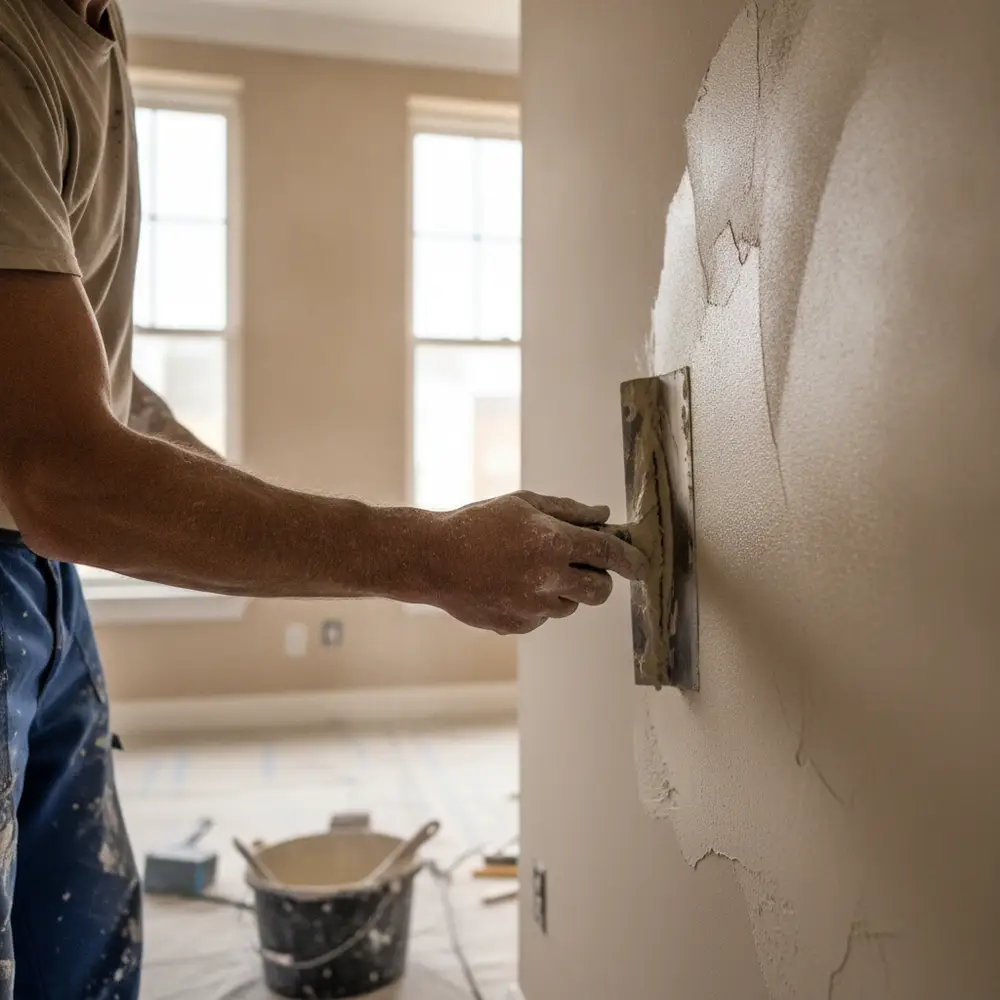
Cutting out bad drywall and hanging new board is the straightforward part. Making the repair disappear is where the craft comes in. A fresh patch has to match the surrounding texture, whether that is a smooth level-five finish, a knockdown, an orange peel, or the hand-troweled look of older plaster.
Older Massachusetts homes are full of real plaster walls with subtle variation that a flat drywall patch will not mimic on its own. Feathering the joint compound, sanding to the right profile, priming the repair so it does not flash, and matching the texture all take a practiced hand.
Then there is paint. New material and old paint almost never match without work, so blending often means priming the patch and repainting the full wall or to a natural break so there is no visible line. Skipping that step is why so many DIY water repairs stay visible under the right light.
How Papito repairs water-damaged drywall and plaster
We start by confirming the source is actually fixed and the area is dry. If the leak is still live, or moisture readings are high, repairing on top of it would only trap the problem. When the fix is outside our scope, such as a roof or plumbing issue, we will tell you what needs to happen first.
From there we remove the compromised material, check the framing and cavity behind it, and rebuild with new drywall or plaster. We finish to match the surrounding texture, prime the repair, and blend the paint so the wall reads as one continuous surface rather than a patched spot.
Papito Inc is family-owned with more than seven years of experience, fully insured, and every job comes with a free estimate and a satisfaction guarantee. If you have a stain, a soft wall, or a ceiling that took on water, call 781-498-8099 and we will take a look and give you an honest read on what it needs.
Frequently asked questions
- Can water-damaged drywall be saved?
- Sometimes. If the damage is a light surface stain and the board underneath is still firm and dry, it can often be dried, sealed, and refinished. If the drywall feels soft, crumbles, or the paper facing has separated, that section usually needs to be cut out and replaced rather than saved.
- How do I know if there is mold behind the wall?
- Musty smells, dark spots that keep coming back, and staining that spreads are common warning signs. Mold can grow inside a wall cavity where you cannot see it. If you suspect it is spreading beyond a small surface spot, bring in a qualified mold remediation professional before doing any cosmetic repair, since mold is a health matter.
- Should I fix the leak before repairing the wall?
- Yes, always. Repairing drywall or plaster while the water source is still active means the damage will simply return. Stop the leak, dry the area fully, and confirm the source is fixed before any new material goes up. We check that the source is handled before we start a repair.
- How long should the wall dry before repair?
- It depends on how much water got in, the material, and airflow, so there is no single number. The wall needs to be fully dry through the core, not just on the surface, before repair. Fans, a dehumidifier, and good ventilation speed it up. A contractor can confirm the area is dry before rebuilding.
- Will the repair be visible when it is done?
- A repair done right should blend in and read as one continuous wall. The key steps are matching the surrounding texture, priming the patch so it does not flash, and blending the paint, often across the full wall or to a natural break. Skipping the finishing work is usually why patches stay visible.
- How do I get water damage looked at?
- Call Papito Inc at 781-498-8099 for a free estimate. We serve Massachusetts, Connecticut, New Hampshire, and Maine. We will inspect the damage, confirm the source is handled, and give you an honest read on whether it needs a patch or a full section replaced.
Related services
Serving
Found this helpful? Make Papito Inc a preferred source on Google.